

A Formula 1 race suit is not an ordinary garment. It is a highly engineered piece of motorsport protective apparel designed for durability, safety, and driver comfort. Even a high-quality replica racing suit is constructed using advanced materials that require proper maintenance to remain functional over time.
Improper cleaning, incorrect storage, or careless handling can significantly shorten the lifespan of a racing suit. Fabric performance, breathability, and structural integrity may all be affected if proper care procedures are ignored.
Professional racing teams follow strict maintenance routines to ensure racewear remains reliable throughout an entire racing season. Regular motorsport equipment maintenance helps protect the structural components of the suit, preserve stitching, and prevent premature wear in high-stress areas.
This guide explains industry-standard practices used in motorsport apparel care, including safe cleaning, drying, storage, and inspection procedures.
Why Proper Maintenance Matters for Racing Suits
Racing suits are manufactured using high-performance racing textiles designed to withstand demanding motorsport conditions. However, these advanced materials still require consistent maintenance.
One of the most common issues drivers face is sweat accumulation inside the suit. Sweat buildup can cause odor, bacterial growth, and gradual fabric degradation if the suit is not cleaned regularly. Many suits include a sweat-resistant lining, but this layer still requires proper washing to remain effective.
Another critical factor is maintaining suit stitching integrity. Seams experience continuous stress during driving movements, especially in the shoulders, knees, and back panels. Dirt buildup and aggressive washing techniques can weaken stitching over time.
Breathability also plays a key role in driver comfort. Many suits feature racing suit ventilation panels designed to improve airflow inside the garment. When these areas become blocked with debris or detergent residue, ventilation efficiency decreases.
Additionally, reinforcement areas built with abrasion resistant fabric protect high-contact zones. Incorrect washing methods can damage these reinforced sections and reduce durability.
Routine maintenance ensures the suit maintains comfort, durability, and professional appearance.
Understanding the Materials Used in F1 Replica Race Suits
Professional racewear is constructed using layered materials, each serving a specific performance function. Understanding these materials helps drivers apply the correct cleaning and care methods.
Polyester Outer Shell
Most racing suits use polyester racing fabric as the outer layer. This material provides strength, flexibility, and resistance to tearing, making it suitable for demanding motorsport environments.
However, excessive heat or harsh chemicals can weaken polyester fibers, which is why gentle washing techniques are recommended.
Mesh or Cotton Inner Lining
The interior of many racing suits includes a breathable mesh lining designed to improve airflow and moisture management.
This lining absorbs sweat and body oils during racing sessions, making regular cleaning essential to maintain hygiene and comfort.
Cordura Reinforced Panels
High-wear areas such as knees, elbows, and seat zones often feature Cordura reinforcement panels.
These panels provide exceptional durability in areas exposed to repeated friction, but they still require proper Cordura racing suit maintenance to prevent fiber breakdown.
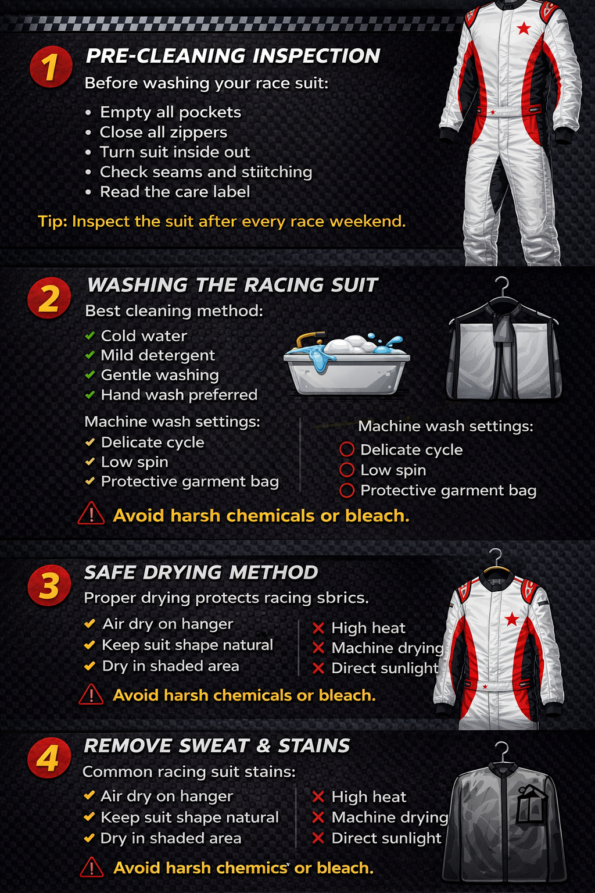
Pre-Cleaning Preparation: What to Do Before Washing
Before washing a racing suit, several preparation steps help reduce the risk of damage.
First, empty all pockets and remove debris that may cause abrasion during washing.
Next, secure every racing suit zipper and fastening component. Closing all zippers prevents metal components from catching on fabric panels during cleaning.
Turning the suit inside out helps protect printed graphics and sponsor logos while allowing the inner lining to be cleaned effectively.
Drivers should also inspect seams for loose threads. Early detection of minor damage prevents small issues from becoming major repairs.
Finally, review the manufacturer’s care label. Many racewear guidelines are designed to align with FIA racewear standards for safety and durability.
How to Properly Wash a Formula 1 Race Suit
Cleaning a racing suit requires controlled washing methods to protect fabric structure and printed graphics.
Improper washing techniques are one of the most common causes of racewear damage.
Hand Washing Method (Recommended)
Hand washing remains the safest cleaning method.
Basic steps include:
- Fill a basin with cold water
- Add a small amount of mild detergent
- Submerge the suit and gently agitate the water
- Focus on areas with visible sweat buildup
- Rinse thoroughly to remove detergent residue
Avoid twisting or wringing the suit, as this may distort the fabric and place stress on seams.
Machine Washing Method (If Necessary)
Machine washing can be used cautiously if hand washing is not possible.
Use:
- delicate cycle
- cold water
- low spin speed
- protective laundry bag
These settings help protect the structure of high-performance racing textiles used in motorsport garments.
Cleaning Products to Avoid
Certain products can severely damage racewear.
Avoid:
- bleach
- strong chemical cleaners
- fabric softeners
These products weaken fabric fibers and can cause fading or structural damage.
How to Dry a Racing Suit Without Damaging It
Drying is one of the most critical steps in racewear care.
Excessive heat exposure can permanently damage racing suit fabrics.
Air drying is strongly recommended. After washing, gently reshape the suit and hang it using a wide hanger to preserve its form.
Avoid placing the suit in direct sunlight for extended periods. UV exposure can weaken synthetic fibers and fade printed graphics.
Machine dryers should generally be avoided because high heat can damage reinforcement areas and distort the fit of the suit.
Allowing the garment to dry naturally helps maintain fabric strength and structural stability.
Removing Sweat, Odor, and Stains from Race Suits
Racing suits often accumulate sweat, oil, and track debris during race events.
Understanding how to treat these contaminants helps prevent permanent damage.
Sweat Odor Removal
Persistent odor develops when sweat residue remains trapped inside the suit.
Pre-soaking the garment in cold water before washing helps remove salt and sweat buildup.
Proper breathable racing suit lining care ensures moisture management systems continue functioning properly.
Oil or Grease Stains
Oil and grease stains may occur during mechanical work around the vehicle.
These stains should be treated immediately using gentle stain removal methods rather than harsh solvents.
Track Dirt and Rubber Marks
Track surfaces often leave rubber marks and debris on the suit.
Light brushing before washing removes loose dirt and prevents unnecessary abrasion during cleaning.
This process is commonly included in a professional race gear maintenance routine.
Proper Storage Practices for Racing Suits
Storage conditions have a major impact on suit longevity.
After cleaning and drying, the suit should be stored in a cool, dry environment.
Using a garment storage bag protects the suit from dust while allowing airflow. Breathable storage bags are preferred over plastic covers that trap moisture.
Avoid folding or compressing the suit for long periods.
Hanging the suit preserves its shape and prevents reinforcement panels from creasing.
Maintaining stable humidity levels also prevents mildew and fabric degradation.
Routine Inspection and Minor Maintenance
Regular inspections help detect small issues before they develop into serious damage.
Drivers should periodically check seams, reinforcement panels, and fasteners. Inspecting these areas is part of a standard racing suit inspection checklist used in professional motorsport environments.
Zippers and cuffs should also be checked for dirt accumulation.
Routine inspection significantly extends the lifespan of racewear and prevents unexpected gear failure.
When a Race Suit Needs Professional Repair or Replacement
Even with careful maintenance, racing suits eventually show signs of wear.
Professional repair may be required if:
- seams begin separating
- reinforcement panels tear
- zipper mechanisms fail
- printed graphics peel or fade
Ignoring early damage can lead to larger structural problems during use.
Drivers should consult experienced racewear technicians rather than attempting unprofessional repairs.
Expert Tips from Motorsport Gear Specialists
Experienced drivers and technicians often follow simple routines to keep their racewear in optimal condition.
Common professional recommendations include:
- clean the suit regularly after race sessions
- avoid heat drying whenever possible
- store suits in ventilated environments
- inspect reinforcement areas after every race weekend
Consistent maintenance practices greatly extend the usable life of racing gear.
Final Thoughts: Protecting Your Investment in Professional Racing Gear
A racing suit represents both essential equipment and a financial investment.
Proper cleaning, drying, storage, and inspection ensure the suit continues to perform reliably throughout repeated track use.
Following structured care procedures protects fabric durability, maintains comfort, and preserves the professional appearance of the garment.
Drivers who follow proper maintenance routines significantly extend the lifespan of their racing suits and ensure consistent performance during every race weekend.


Leave a comment